fitness club design tips for Management, Staff, and Member Magic
Key Points
- This article features fitness club design tips that help create “magic” when management, staff, and members all get what they need.
Design is most effective when management gets control, financial efficiency, and a strong first impression; staff gets easier workflows and usable support spaces; and members get a motivating environment that helps them stay engaged.
Strong club design improves operations by making sight lines, check-in flow, technology, cleanable finishes, storage, and staff spaces work together so the club feels organized, easier to run, and less frustrating day to day.
The most effective gyms also protect staff and member experience with practical planning, including open training space, dedicated janitor storage, easy-to-use lighting and sound controls, and enough room for functional movement, stretching, and group training.
Magic happens in a business environment when all parties involved are finding that their expectations are being met and then even exceeded, yet it is synergistic.
If one group is finding their expectations are being met, but the other two aren’t, then there is no magic and no optimal potential is achieved.
Several key design attributes can greatly help in creating a winning environment for management, staff, and members. Some may seem so obvious that they are often overlooked, minimizing the design attention they receive.
What Fitness Club Management, Staff, and Members Really Want
Management want design to be exciting, inspiring people to join and to keep coming back for more. But they also want design to minimize their operational issues and expenses, while not being costly to build.
Staff want design to make their job easier, with more income potential, and to give them opportunities to do the best they can with what their job description calls for.
Members want design to help stimulate them in their ongoing challenge of getting and staying in shape. They love the idea of having a variety of beautiful fitness and wellness spaces, often wishing them to be exclusive but lower priced.
Successful design can get what each group wants, but it is important to define what those design objectives are and incorporate them into any design, whether for a new design or renovation of any existing one.
So, how can design lead to magic with all three groups?
Design Questions for Better Management
The following questions can help management reach new levels of operation success from design:
- Does design allow for management to have good control over the environment?
- Do sight lines allow for good visual and personal interaction with members and staff?
- Is there a good interaction of technology with design, such as camera systems, allowing for better visual awareness of different areas of the club?
- Does the lobby and front desk design make it difficult for members to get by without checking in (while also making it easy to check-in)?
- Does the design allow for the proper presentation of all the desired programs and services that are necessary to reach management’s financial goals (yet are cost-effective to create)?
- Are chosen finishes and materials easy to clean, and do they minimize maintenance issues (such as walls that do not show scuff marks)?
- Does staff have to put in extra effort to keep things clean?
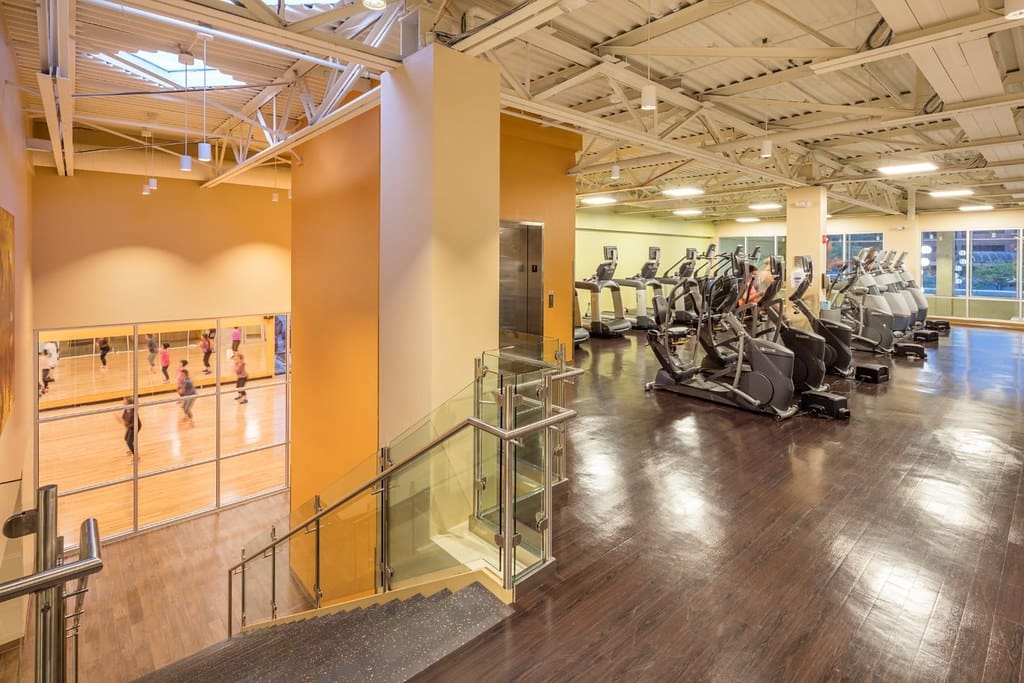
Proper design can solve all of these day-to-day bothersome issues for management. But, this requires a well-thought-out design, being careful to choose materials and finishes that cost less, yet are as exciting and dynamic as more costly items.
Here is a great quote about staff that can apply to clubs and design. J.W. Marriot said: “Take good care of your employees, and they’ll take good care of your customers. And, the customers will come back.”
Design is a key way to take care of members, but it is the staff in clubs interacting with members every day who breathe life and spirit into the experience.
That spirit can often overcome a flaw in the design, but design can rarely overcome a gap in service.
Fitness Club Design Tips for Better Operations
Give Your Staff Space For Their Work
One of the most often overlooked design points is space for staff. Staff lounges are in short supply, or they are an afterthought, having employees sitting in a storeroom on breaks. Commit to a well-thought-out staff space, and the staff will be grateful for it.
Help staff in keeping a club clean and maintained. A janitor’s closet with a mop sink should always be in each locker room.
Prioritize Open Space, Storage, and Multi-Use Areas
Don’t forget adequate storage (whether rooms, cabinets, or racks) for anything and everything that needs to prevent clutter and allows for easy access and organized day-to-day use.
Give trainers the space they need to do their job. Lacking in many clubs is adequate, open space for functional/core movements and stretching. Make the space commitment, even if it means less equipment, because open space is now as important as any other space in a club’s exercise offering.
Choose Lighting and Sound Controls That Work Best
Unique lighting and sound systems for group training spaces are increasingly popular for both staff and members. However, proper design should allow for easy-to-use, wall-mounted control panels for music and lighting choices. Overcomplicated systems confuse and frustrate.
Click here to access the Club Insider issue where this article was featured.
For a broader framework on service quality, HFA’s best practices to enhance customer experience show how every touchpoint shapes member loyalty.
Looking for Designers For Your Fitness Club?
As industry experts who have successfully transformed 1,000+ facilities, we can help boost management operations, staff performance, and member experience with better design.
Check out our services and specializations pages to find the best fit for your project.
For more information and details or to contact any member of the ODSI team, click here to call or send us a message.
Join the Journey!